Anime Drawing Clip Studio Paint
Contents
- Getting to grips with Anime-way coloring
- Clip Studio Paint'southward tools & how to prepare them upwardly
- Walkthrough
Part 1: Getting to grips with Anime-style coloring
Anime-style or Cel Shading coloring is a style that mimics how traditional anime was animated. It applied elementary shading without blending to get in easier to animate.
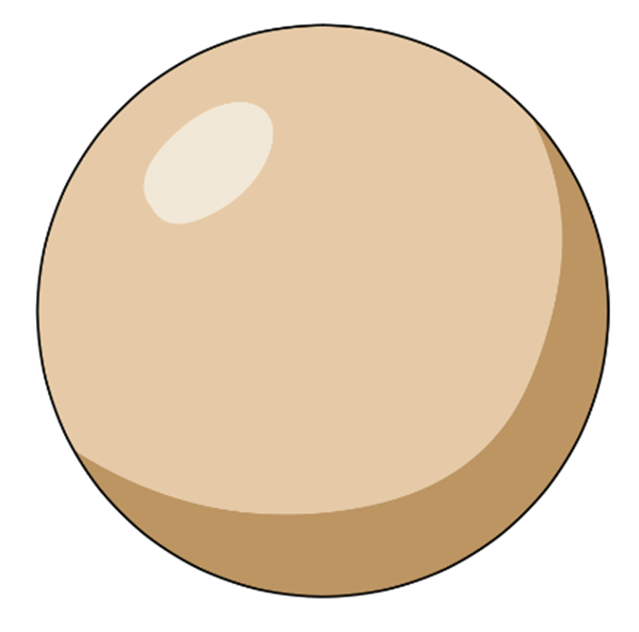
To enhance this kind of coloring manner, y'all tin use other tools like gradients or effects. Yous can even apply filters to give an illustration a particular atmosphere or feeling. Since this coloring style is very eye-communicable, it is not but used in animation but likewise in illustration.
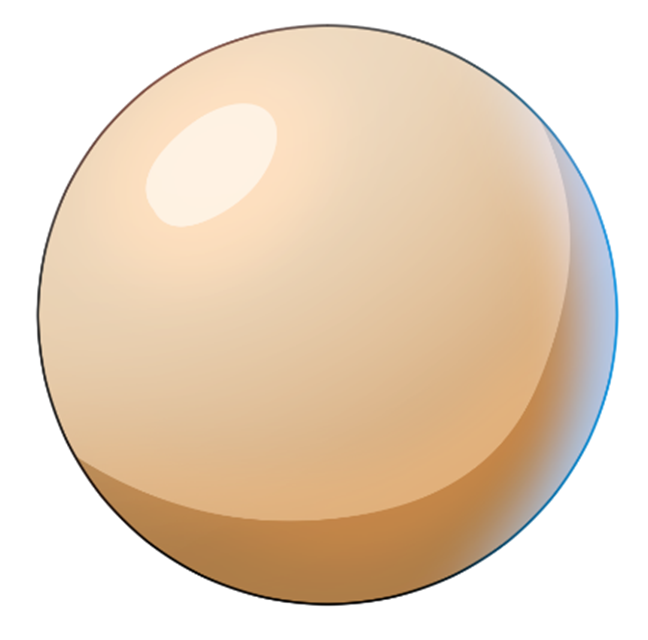
Advantages:
- Depression difficulty level
- Doesn't take a lot of time
- Hands practical and changed
- Easily adapted to other coloring styles

Function 2: Clip Studio Pigment'south tools and how to set them upwardly
In Clip Studio Paint, tools are organized by type. Each Tool has sub tool categories. The drawing tools are all in the same category in the sub tool palette.
Tip: Try out different Pen and Pencil tools to find the ones that suit you. You tin can use Pencil tools for sketching and Pen tools for line art. There are also lots of other brushes you can use, such every bit airbrushes for simple gradients and ornament brushes for making patterns. Additionally, you can also download more brushes from Prune Studio Assets.
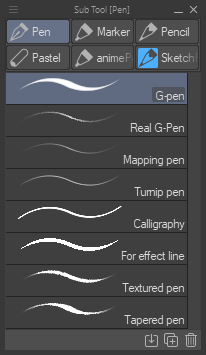
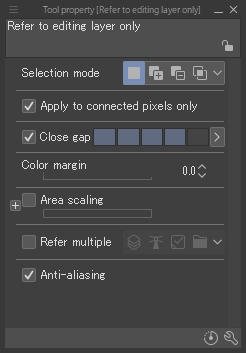
Once you've finished your inking, employ the pen tool and the fill tool to colour. For this tutorial, nosotros volition be using the pen tools that produce more of a solid, opaque line, like the Thou-pen, for example. With the Make full Tool, we will mainly exist using the Refer only to editing layer and Refer other layers options.
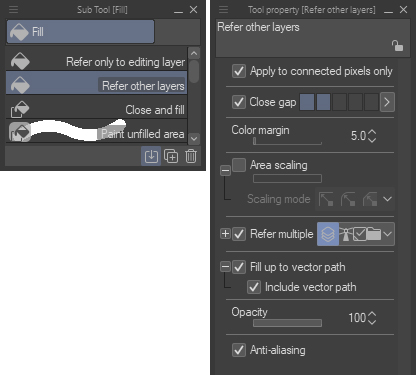
Let's take a look at the Fill Tool's settings:
Apply to connected pixels only: if this is checked, information technology will fill up the connected area. But if y'all uncheck it, it will not fill the continued area, but instead, it will fill all the areas that are the aforementioned color on that layer in the colour you lot are filling with. For example, if you click on a bluish surface area, it volition fill every blue area in the layer with the color you cull.
Close Gap: if set up to 0, if you try to fill in an area and there are gaps in the line art, the colour will fill areas that aren't enclosed. Yet, if y'all increase the value, it will become less sensitive to small gaps in the line fine art and won't spill over as easily. Then again, if prepare likewise high, it won't evenly make full modest areas.
Area Scaling: this will permit you to fill a picayune bit closer to your line art and help embrace the edges between the make full and the line art. But if yous set it too high, it volition fill past the line art, so please be careful.
Scaling Mode: At that place are many options hither. You lot can play effectually with them to see what best suits your piece of work.
Refer Multiple: this will allow you to refer to other layers when filling. Utilize this setting when you want to go along the line art and colors on divide layers.
At that place are 4 options here:
- All layers: will refer to all layers on the canvas.
- Reference Layer: volition simply refer to the layer that you lot set as a reference.
- Selected Layer: will only refer to the layers currently selected.
- Layer in folder: will refer merely to the layers in the current folder.
Please use them as needed.
With the default tools that Clip Studio Pigment provides, the just difference between Refer only to editing layer and Refer other Layer is the usage of Refer Multiple. When you empathise the differences betwixt these tools, they will be easier to use. And so in that location's no need to alter the setting each time; instead, you lot'll be able to choose the correct tool for the job.
Opacity: this is how opaque or transparent the color is when you fill.
Anti-aliasing: this will soften the edges of the lines and brand them wait less jaggy.
Automobile Select: otherwise known as the Magic Wand tool. This tool allows you to select a specific surface area of the same color. The settings for Auto Select are like to the Fill up tool.
Making Custom Tools
This fourth dimension the goal is to make a fill and color selection tool that ignores the threshold. For instance, if you want to change a specific color in the whole paradigm or select a specific color to depict in.
To make your ain custom tool:
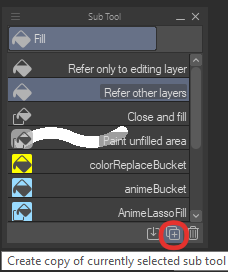
- Start by selecting a default tool to utilise every bit a base.
- Click Create a copy of currently selected sub tool (the modest icon with two squares and a + symbol at the lesser of the sub tool menu), and you will be able to make a new tool.
- Rename and change its icon and color and so y'all can easily find it.
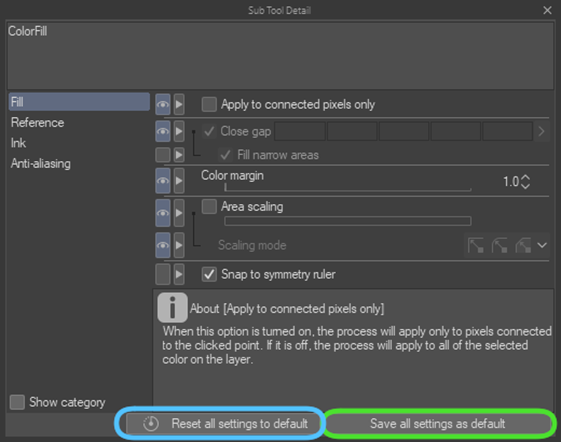
At present you've got the base of your new tool; you can change its settings by clicking the spanner icon at the bottom of the Tool property tab. This time, we want to fill all the specific colors in the paradigm, then uncheck Apply to continued pixels but. To save the changes you've made to the tool's settings, click Save all setting as default in the Sub Tool Particular dialog box. After saving, if you accidentally alter the setting, you can easily revert to them past clicking Reset all settings to default.
Function 3: Walkthrough
1. Sketch out your idea
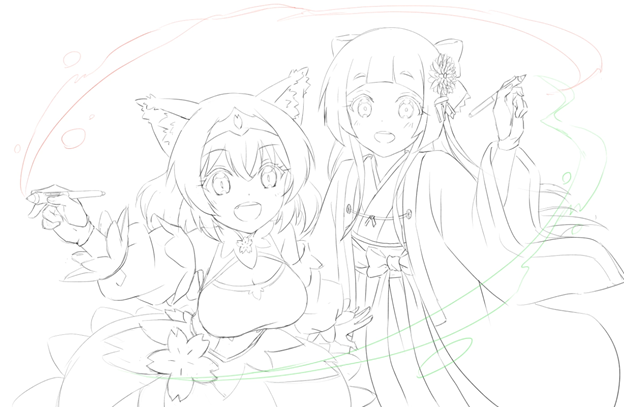
ii. Paint on the shading guides
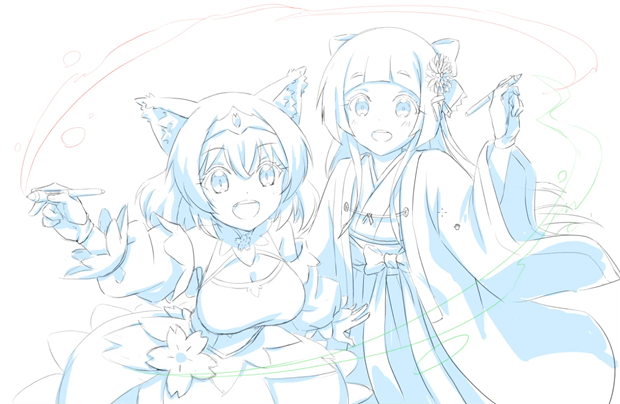
Because the sketching stage is just a rough outline of your thought, you lot don't take to spend a lot of time on it. This gives you time to focus on the direction of the light and where to put the shading. For now, don't worry nearly the colors.
3. Inking
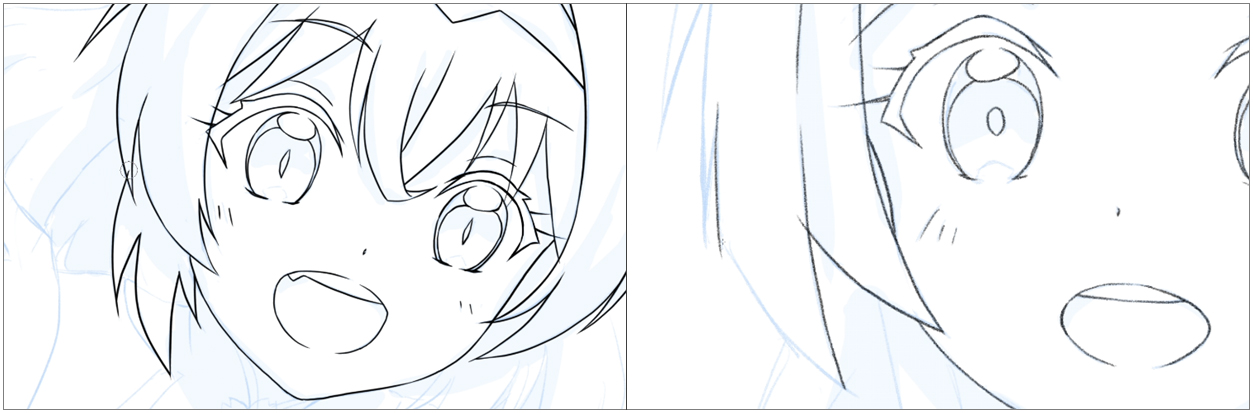
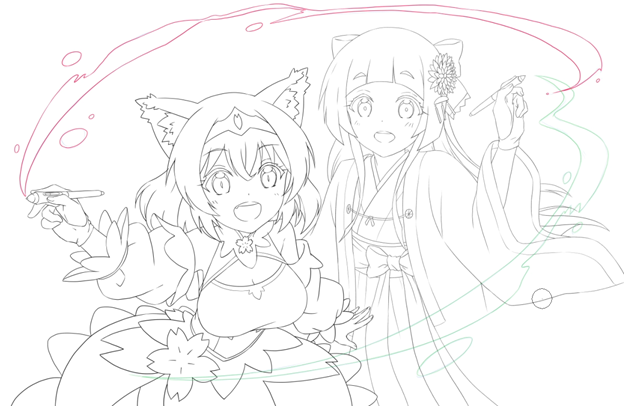
For the line fine art, let's use a vector layer. Vector layers are different from raster layers. Run across this commodity for a good explanation near how they're different: https://tips.clip-studio.com/en-usa/articles/600 You can employ whatever pen, pencil, or brush yous like to do line fine art. This fourth dimension I used the G-pen and Existent Pencil.
If y'all want more of a manus-drawn look, it'south all-time to use a pencil tool. But if y'all desire it to exist abrupt similar in anime, the G-Pen will help you achieve that effect.
4. Base Color
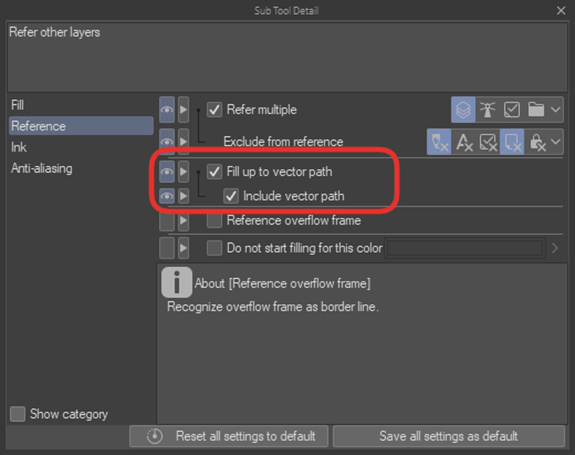
Begin by creating a raster layer and place it below the line art layer. Then use the fill tool to lay down your base colors. Use the Refer other layers sub tool to fill up in the line art layer. To stop white pixels appearing in between your lines and the base colors, utilize the Fill up to vector path choice in the Tool Property tab. Instead of filling upwardly to the edge of the line, it will take the vector line into consideration, which ways information technology will fill in all of the anti-aliasing parts of the line besides. If yous become further into the tool settings, there'due south an Include vector path checkbox as well. If checked, it will fill to the centre of the vector line.
If y'all're drawing a character from a reference image, you lot can use the subview to show the reference image and the color picker to make certain you are using the same colors as your reference.
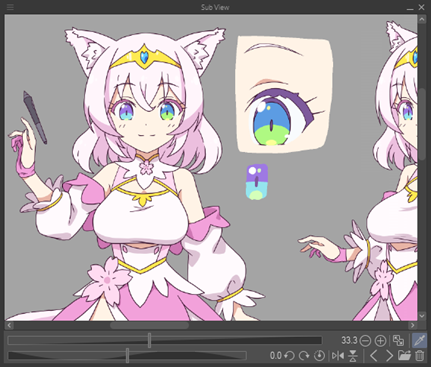
This is a very handy characteristic you can use instead of opening multiple reference images and switching through them.
If you want to change a specific color, you can utilize the newly created fill tool to hands change the color.
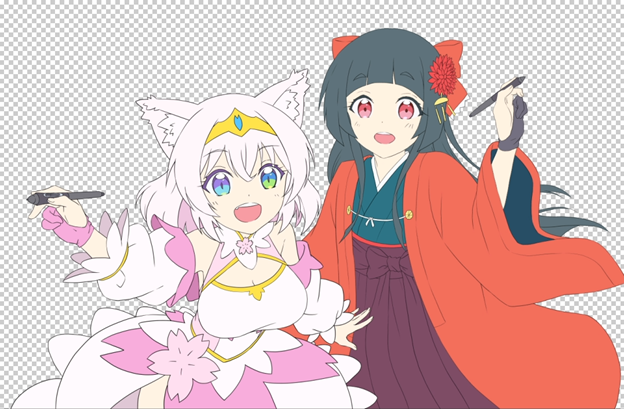
5. Shading
If you make up one's mind your light source when sketching, y'all can then do your shading accordingly. First, create a new raster layer. Then select an opaque pen tool such equally the M-pen so that you can fill the colour the shadows in evenly. Then draw lines to create the shape of the shadows according to your sketch. Although we are using our sketch as a reference, if yous see room for improvement when drawing the shadows, then brand adjustments as you lot see fit. Also, be certain to apply the newly created option tool, and then you don't go over the line art's edges. Now, observe the color you desire, and then utilise the pen to draw the shadow'southward edges. Or if you see some areas that can be colored completely, practise information technology.
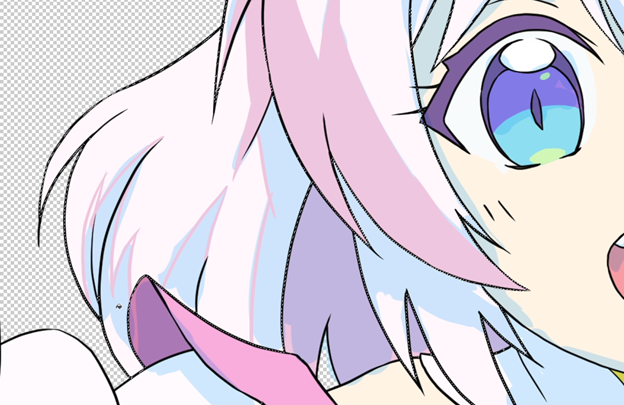
You lot can also use the fill tool for this step. It's all-time to go along the sketch layer, the line art layer, and the make full layer in split folders. And modify the fill tool setting from refer multiple to layer in binder. This will be super helpful for filling in the colors!
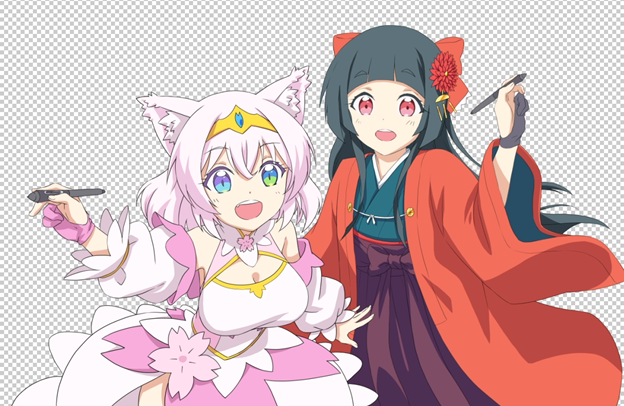
6. Highlights
The process is the same equally shading, but make sure you create a new layer for the highlights so they're easier to edit.
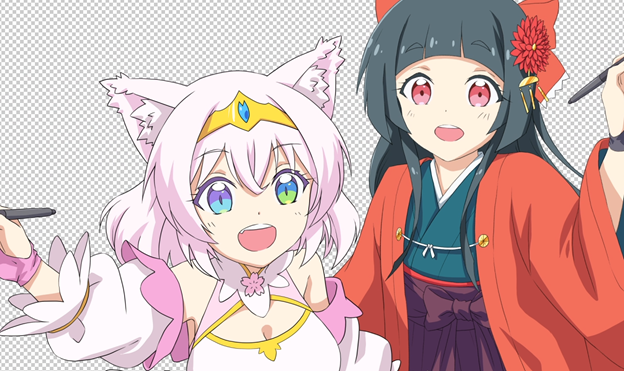
7. Layer Management
Anime-mode coloring is not complicated. So you shouldn't accept also many layers. Yet, it's a good idea to keep your layers organized and named and so they're easy to find. Since you're not juggling likewise many layers, and yous'll simply exist blocking in colour, y'all can use the selection tool to easily select any areas y'all want to adjust. If you desire to make a work with more detail, you can ever create more layers later. Today, however, we are going to take it easy.
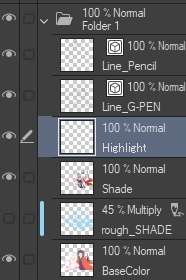
8. Add more details to your illustration
For case, add some blush to those cheeks!
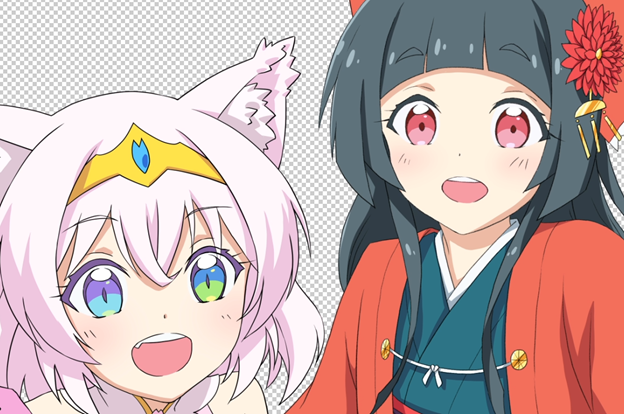
For this step, select the pare color, then create a new layer and lightly use the airbrush over the cheeks to add a touch of pink. If yous want to add some slope shadowing with the airbrush to other parts of the character like the hair or clothing, don't become overboard – just add a light touch. Less is more here!
▼Animated GIF
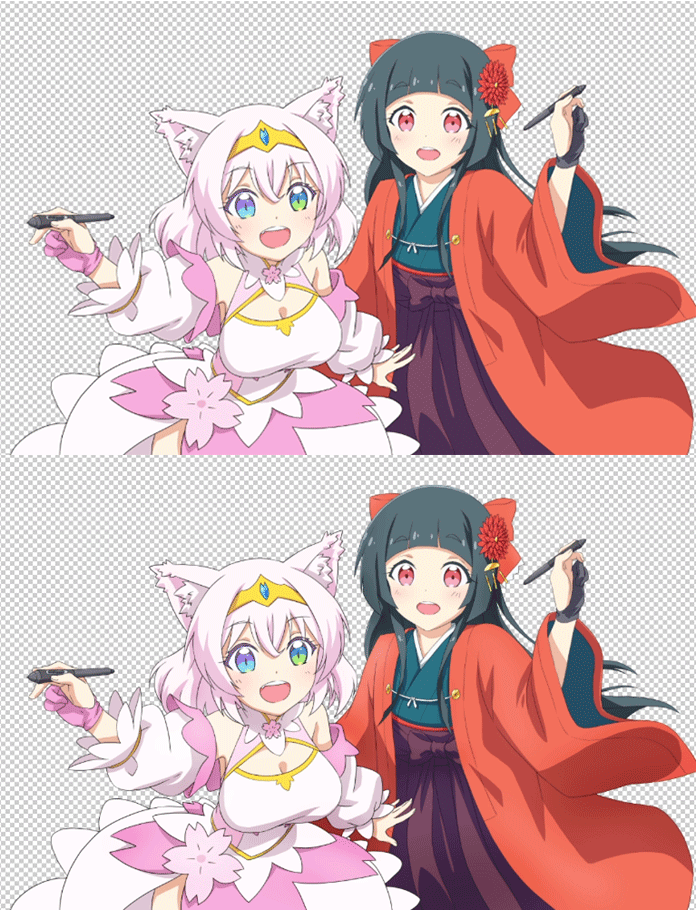
ix. Background
If you're not familiar with or sure how to depict backgrounds, a simple and constructive way is to use patterns or ornament brushes.
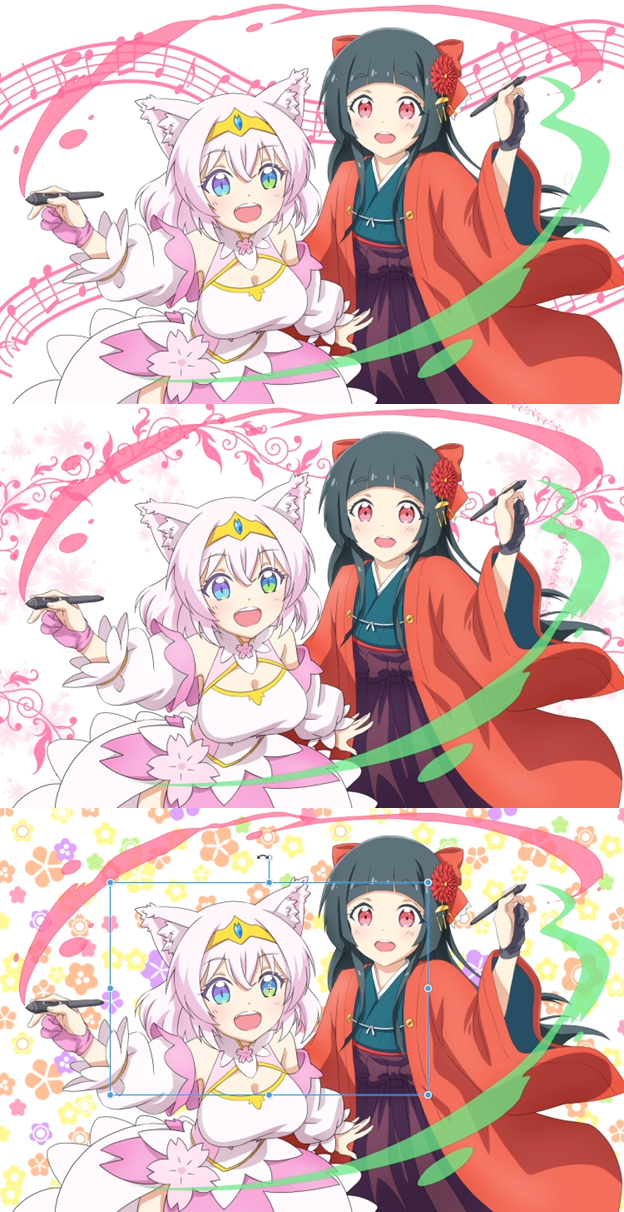
There are some materials pre-loaded in Prune Studio Pigment in the Material palette. You tin can too download more from Clip Studio Assets.
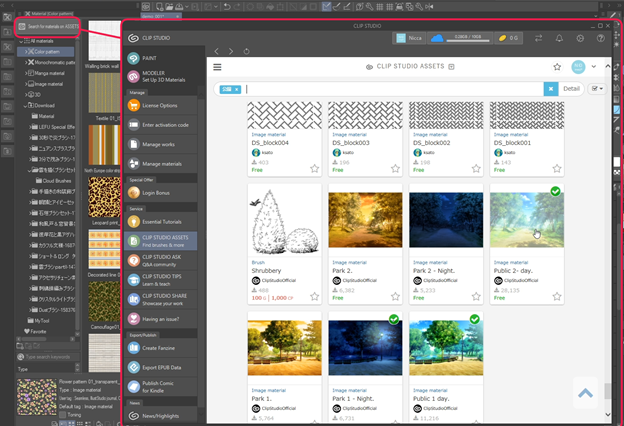
Afterward downloading, yous will find it in the Download folder on the Material tab.
If you lot want to use groundwork or pattern materials, just drag them from the Material tab and drop them onto the sheet. And so use the object tool to conform them as much as you like. In the example of castor materials, just drag and drop them to the subtool tab of your choice. And so you tin can use them every bit y'all would whatsoever other brush.
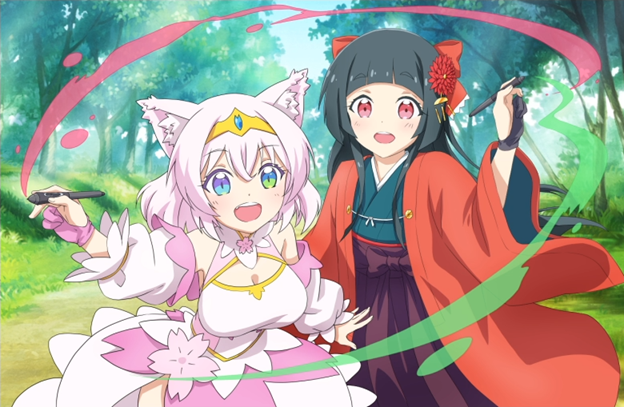
10. Decorations
Other than adding the background, you can add other details to the foreground of the image, similar sparkles, petals, or patterns.
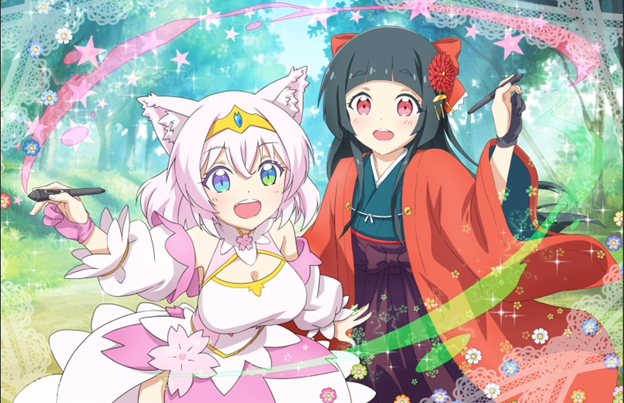
xi. Adjusting Colors
When y'all add the background, you lot might need to adapt its color to compliment the characters. Instead of recoloring the whole background, you can make use of Correction Layers.
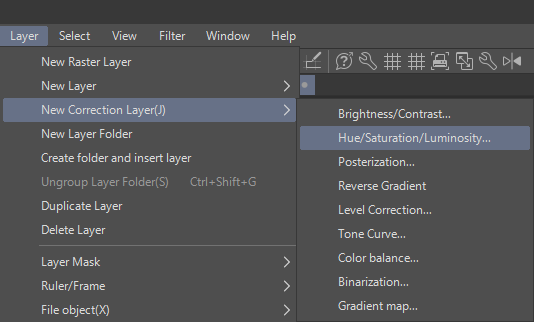
The commonly used options are Tone bend, Color Balance, Hue/Saturation/Lightness, etc. This time we will adjust it a little so they don't contrast too much confronting the background.
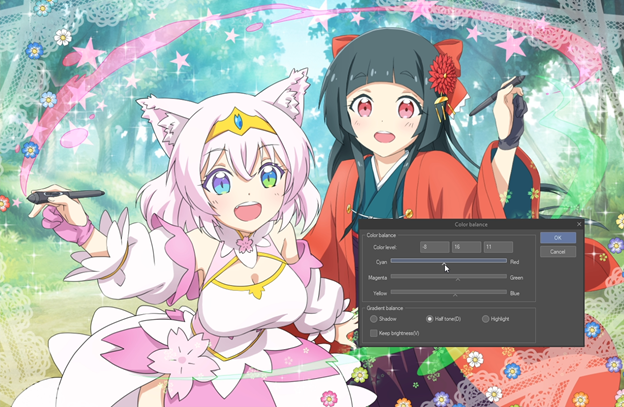
In addition to Correction layers, y'all tin can hands adjust the color of your characters using the Clipping Layer option.
Furthermore, you can also change the Layer blending modes (the drop-down menu on the Layer palette) such as Overlay or Soft Light, to adjust the color. Then employ the airbrush tool to shine things over and give the analogy a softer look.
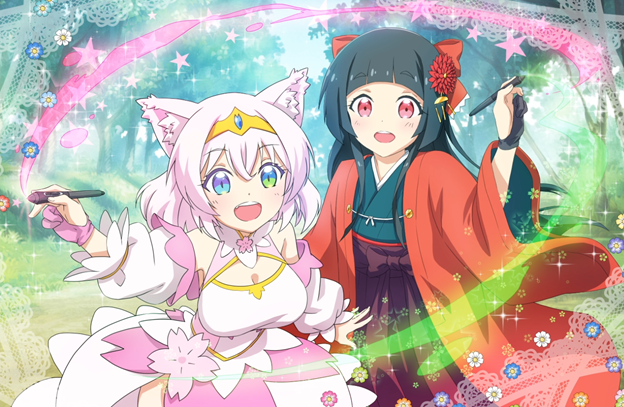
Extra Tips: Diffusion & Glow
Use the Merge Visible to new Layer control to merge all the layers to a new layer. Then, make a indistinguishable.
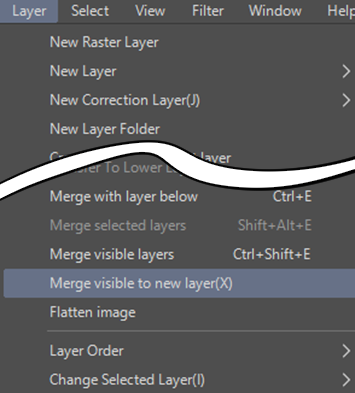
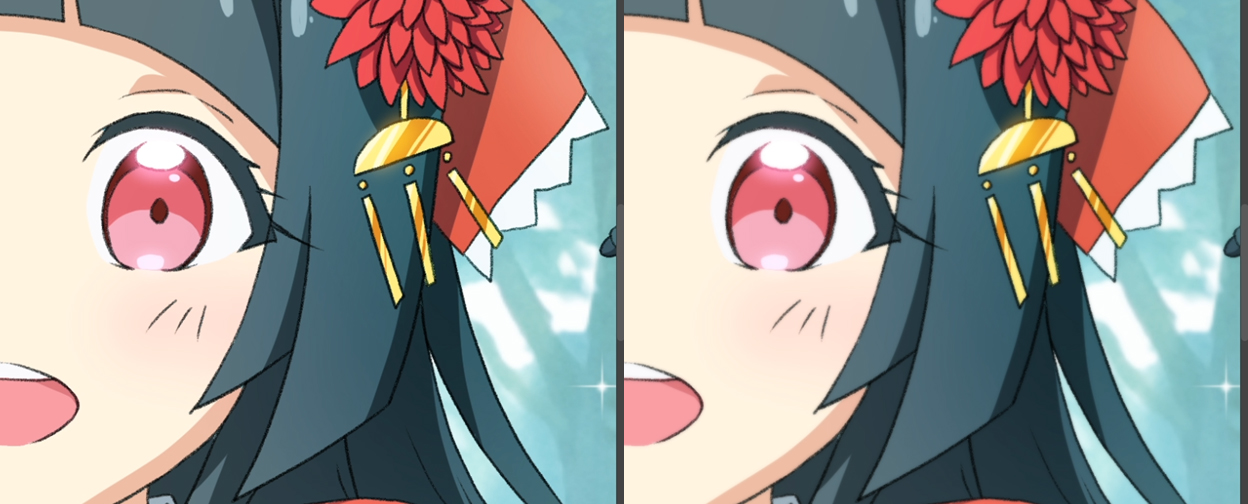
By applying Gaussian mistiness on the meridian layer (spend some fourth dimension playing with the settings to find the right level for your illustration) and decreasing the opacity by almost 20 – xl%, yous can soften the analogy even more.
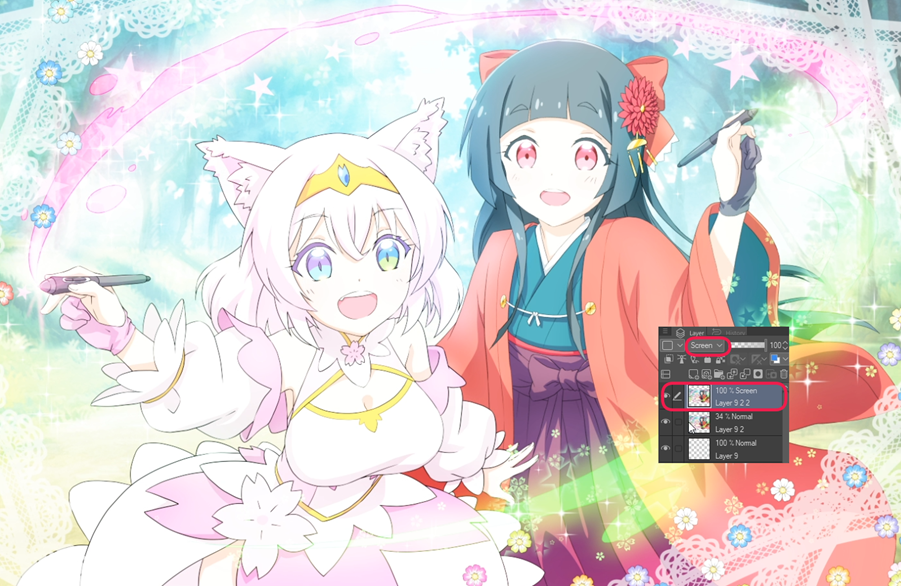
To become a glowing effect, select the duplicated layer, and change its blending mode to Screen.
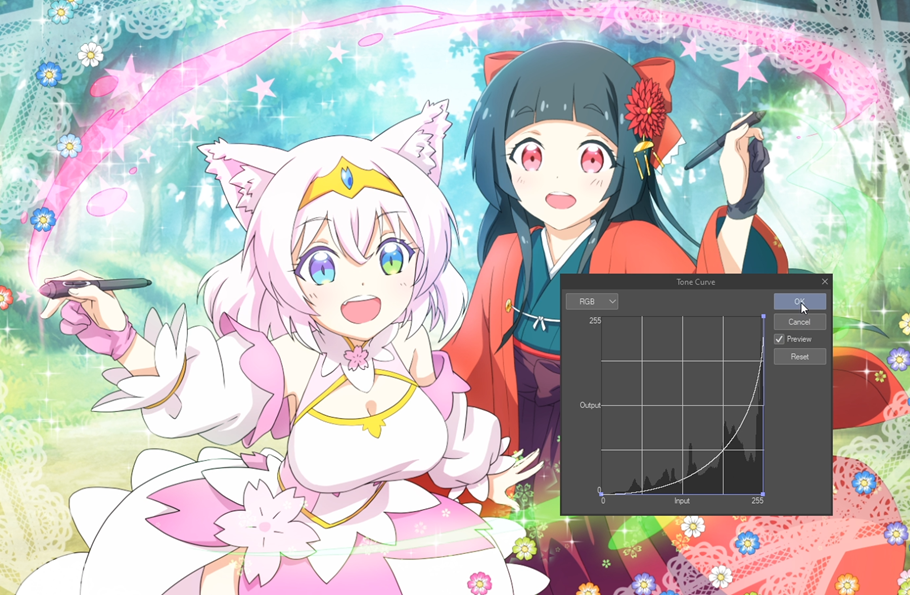
Utilise the Tone Curve command and arrange the bend downwardly.
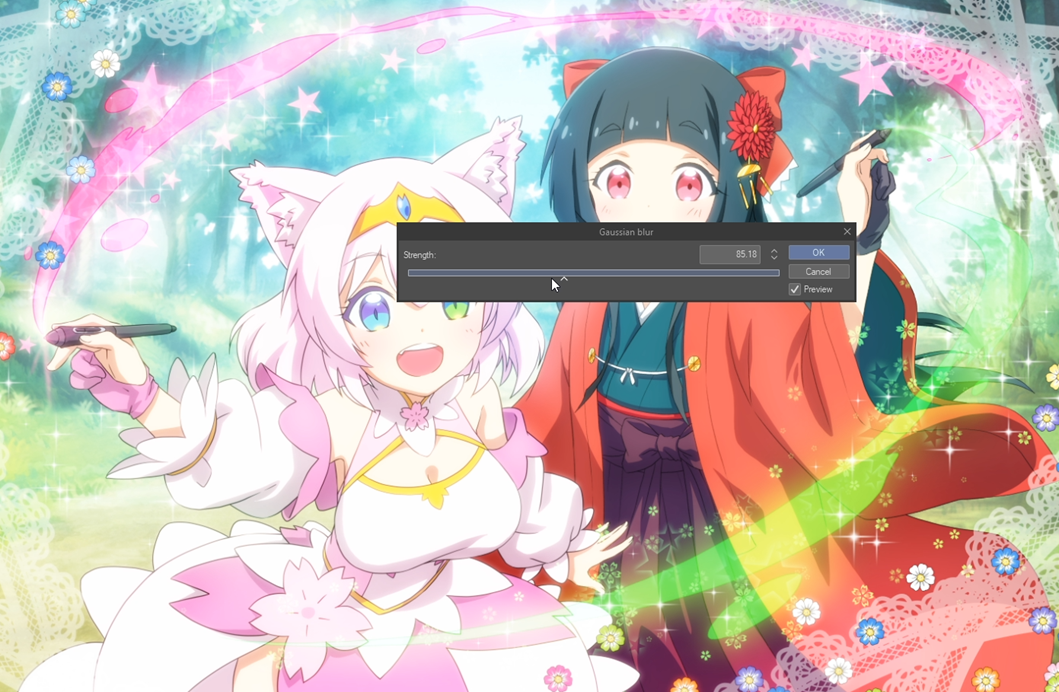
And then apply the Gaussian blur I explained earlier and decrease the opacity by about 20 – 40%. Et voila!
I'll share one terminal secret with you to brighten up the experience of the illustration. If you create a new layer above all your other layers and change the blending mode to Screen, then utilise the airbrush to add together a light color around the border of the canvas, it makes the image brilliant and shiny every bit if there is light shining through the air!
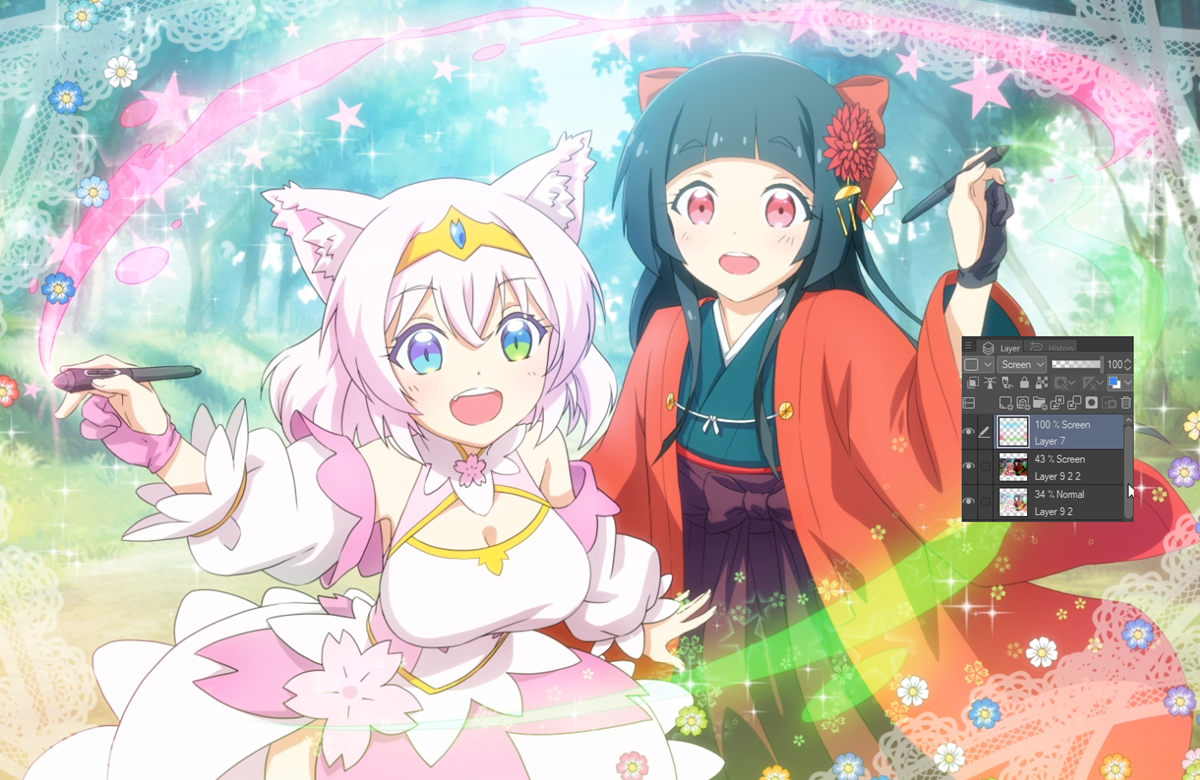
Take a expect at the last illustration and download the file here.
pattersondidettioners.blogspot.com
Source: https://www.clipstudio.net/how-to-draw/archives/162911
0 Response to "Anime Drawing Clip Studio Paint"
Post a Comment